Philippine E-Journals (PEJ) 2026: Complete User Guide to Research, Journals, Articles & PDF Access
Access to reliable academic information is essential for students, educators, researchers and professionals who want to develop knowledge or support their work with credible evidence. In the Philippines, Philippine E Journal (PEJ) provides an online platform where users can discover scholarly publications, explore academic research and locate articles published by participating universities and research organisations.
The official website, Philippine E-Journals (PEJ), brings together academic journals covering different fields, including education, science and technology, agriculture, business, humanities and social sciences. Instead of searching through individual university websites, visitors can use the PEJ platform to explore journal listings, search for relevant research topics and review available publication information in one place.
What Is Philippine E-Journals (PEJ)?
Philippine E Journals (PEJ) is an online academic research platform that provides access to scholarly journals, research articles and academic publications contributed by participating Philippine universities, colleges and research organisations. It serves as a central resource for discovering locally published academic research without requiring users to visit multiple university websites individually.
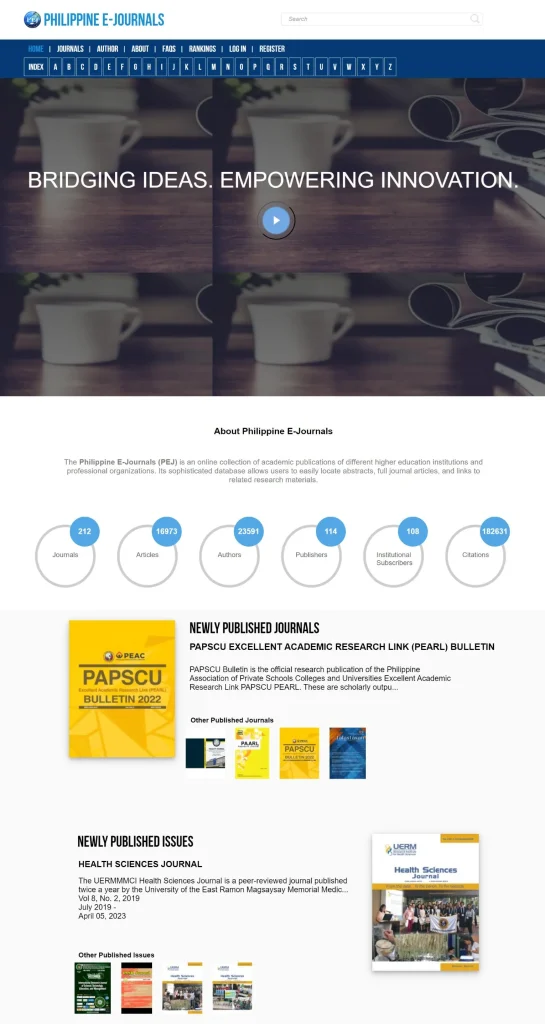
Through the official PEJ website, https://ejournals.ph/, students, educators and researchers can explore academic publications, search for research topics, review article abstracts and examine bibliographic information. The platform covers a range of academic disciplines, including education, agriculture, business, economics, engineering, science and technology, humanities and social sciences.
One of the most valuable features of Philippine E Journals is its focus on Philippine-based academic literature. Students preparing undergraduate theses, research proposals, feasibility studies and Review of Related Literature (RRL) can use the platform to discover studies addressing local issues, communities, institutions and industries. For example, someone researching Philippine education can explore studies about teaching strategies, classroom management and student performance, while agriculture students can investigate local farming practices, crop production and sustainable agricultural development.
Who Can Use the PEJ Platform?
Philippine E Journal supports a wide range of academic and professional users:
- College and university students: Discover credible academic references for assignments, research papers, undergraduate theses, capstone projects and literature reviews.
- Teachers and educators: Explore published educational studies, teaching methodologies, curriculum research and classroom-based investigations.
- Graduate students: Review existing academic literature, compare research approaches and identify potential research gaps for master’s and doctoral studies.
- Academic researchers: Discover Philippine-based scholarly publications, examine previous findings and identify related studies for ongoing research projects.
- University faculty members: Locate academic references that support lectures, research proposals, scholarly discussions and institutional studies.
- General readers and professionals: Explore scholarly information and develop a better understanding of Philippine issues, academic subjects and specialised topics.
Main Features and Research Resources Available on Philippine E Journals
| Platform feature | Description and benefits |
|---|---|
| Academic Journal Directory | Browse participating scholarly journals and discover publications contributed by Philippine universities and research organisations. |
| Research Search Facility | Search for academic articles and publications using keywords, research topics and relevant subject terms. |
| Article Details and Abstracts | Examine available article information, including titles, authors, abstracts and publication details, to determine whether a study is relevant. |
| Multidisciplinary Research Coverage | Explore publications covering education, agriculture, business, economics, science, technology, humanities and social sciences. |
| Publisher and Journal Information | Identify journal publishers and examine available publication information before selecting academic references. |
| Accreditation and Indexing Information | Review accreditation or indexing classifications displayed on journal listings, where available, to understand the journal’s stated academic classification. |
| Full-Text Research Access | Read or download complete research papers when the individual publication provides full-text access or the required subscription or institutional permission is available. |
| Philippine-Based Academic Literature | Discover studies focusing on Philippine communities, educational institutions, industries, local policies and national development concerns. |
Why Is Philippine E Journals Useful for Academic Research?
Philippine E-Journal can make academic research more efficient by bringing together publications from participating institutions in one searchable platform. Instead of relying exclusively on general search engines, users can explore locally published scholarly materials that may be particularly relevant to Philippine research topics. Visit Homepage.
For students preparing a Review of Related Literature, the platform can help identify previous studies, compare research findings and locate references that support their research questions. Researchers can also use available publication information to trace authors, examine publication dates and distinguish between related studies.
Before citing an article, always verify its author, publication title, journal name, publication year, volume, issue and page numbers when available. Check the original article or journal record whenever possible to ensure that your references are accurate.
Important: Not every publication listed on Philippine E Journal necessarily offers a free downloadable PDF. Some articles may provide only abstracts or bibliographic information, while others may require institutional access, a subscription or permission from the publisher. Always check the individual article’s access conditions before attempting to download or distribute its full text.
Key Things to Understand Before Using Philippine E-Journals
Before conducting academic research through Philippine E-Journal (PEJ), it is important to understand how the platform organises scholarly publications, what information is available to visitors and how access to complete research papers works. Knowing these details will help you avoid unnecessary searches, identify suitable academic sources and use published research more effectively.
1. Public Research Discovery and Article Searching
Philippine E Journals allows visitors to explore available academic publications and identify research materials related to different subjects. Users can begin by searching for keywords, examining journal listings and reviewing available article information.
This discovery process is particularly useful for students preparing research proposals, Review of Related Literature (RRL), undergraduate theses and academic assignments. You can initially review publication titles and abstracts to determine whether a study is relevant before spending time examining the complete document.
2. Journal Directory and Publisher Information
The journal directory helps users discover academic publications from participating Philippine institutions and research organisations. Each journal may provide information about its title, publisher, subject coverage and available publication issues.
Reviewing these details helps you identify the academic source behind a particular article. It also makes it easier to distinguish between publications from different institutions and select journals that match your research discipline.
3. Research Accreditation and Indexing Categories
Some journal listings may display accreditation or indexing classifications, including Scopus and Web of Science. These classifications can help researchers identify publications for further academic evaluation.
However, appearing in a category or directory should not automatically be interpreted as confirmation of a journal’s current indexing status. Indexing coverage can change, and researchers should verify the exact journal title and ISSN through the relevant official databases.
Official verification resources:
4. Full-Text Research and PDF Access
One important distinction is that discovering an academic article does not necessarily mean that its complete contents are freely available.
Depending on the publication’s access arrangements, PEJ visitors may encounter:
- Public article information: Bibliographic details and other publication information available for viewing.
- Abstract access: A summary of the research, including its purpose, methodology and findings.
- Full-text access: Complete research papers available through an online reading or PDF option.
- Restricted access: Publications requiring institutional authentication, a subscription or other authorised permissions.
If an article is restricted, check whether your university library provides electronic journal access. You can also contact the publisher or author to ask about legitimate access options.
How to Use Philippine E-Journal for Academic Research
Using Philippine E Journals effectively requires a structured research approach. Instead of collecting random publications, start with a clearly defined research topic, identify suitable academic journals and evaluate individual articles before including them in your academic work.
The following step-by-step instructions explain how to navigate PEJ and find relevant research materials.
Step 1: Visit the Official Philippine E Journal Website
Begin by opening the official Philippine E Journals website using an updated web browser.
Official website: https://ejournals.ph/
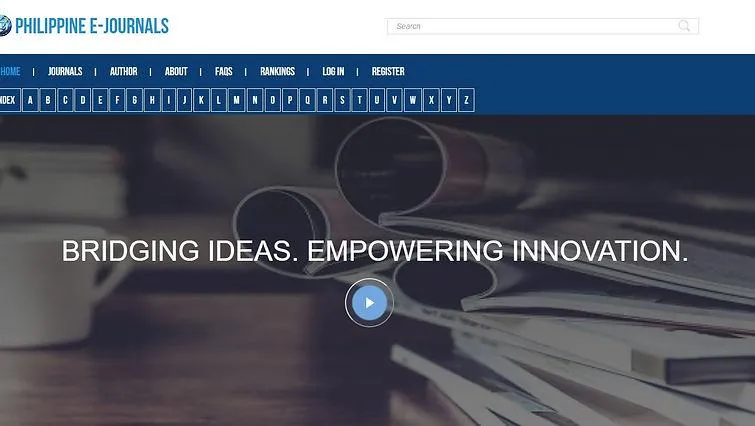
After the homepage loads, explore the available navigation options, journal listings and research discovery features. Familiarising yourself with the homepage will make it easier to locate the relevant sections when searching for academic publications.
Follow these recommendations before proceeding:
- Make sure you are visiting the official PEJ domain.
- Use an updated version of Chrome, Firefox, Edge or another supported browser.
- Prepare your research topic and a few relevant keywords.
- Explore the available journal and article listings.
- Follow the website’s instructions if a particular section requests authentication.
You can begin exploring the publicly available information without assuming that an account is required for every research activity. Registration or institutional authentication may be necessary for certain restricted resources.
Step 2: Search for Academic Research Using Relevant Keywords
The search facility helps users locate academic publications without manually examining every journal. Enter a keyword or subject phrase related to your research question and review the available results.
For example, students researching environmental issues can try:
- Philippine mangrove conservation
- Coastal resource management
- Marine biodiversity in the Philippines
- Climate change adaptation
- Sustainable agricultural development
Education students can explore topics such as:
- K-12 curriculum implementation
- Digital learning in Philippine schools
- Student academic performance
- Classroom teaching strategies
- Educational technology adoption
Research tip: Start with a broad keyword and gradually make it more specific. For example, if searching for education produces too many unrelated results, narrow your search to digital learning in Philippine universities.
Using focused keywords can improve the relevance of your results and reduce the time spent reviewing unrelated publications.

Step 3: Explore Academic Journals by Subject and Publisher
If you already know your research discipline, browsing the journal directory can help you discover publications that match your academic interests.
Visit the Official Philippine E-Journals Directory to explore available journal listings.
Common academic fields and their related research topics include:
| Academic field | Example research interests |
|---|---|
| Business and Economics | Finance, entrepreneurship, marketing and business management |
| Education | Teaching methods, curriculum development and student learning outcomes |
| Agriculture | Crop production, farming technology and agricultural development |
| Science and Technology | Scientific investigations, environmental studies and technological innovation |
| Information Technology | Computer systems, digital transformation and information management |
| Social Sciences | Sociology, psychology, community development and social behaviour |
| Humanities | History, language, literature, culture and philosophy |
| Health Sciences | Nursing, public health and healthcare research |
You can also examine the publisher information to understand which institution or organisation is responsible for a particular publication.
Before selecting a journal, review its subject coverage, publication history and individual article topics. A journal’s title alone is not enough to establish that its contents are relevant to your research.
Step 4: Identify Journals Associated with Scopus and Web of Science
Researchers preparing graduate-level papers, scholarly publications or systematic literature reviews may need to identify journals associated with recognised academic indexing services.
Two important research databases are:
- Scopus: An academic abstract and citation database used to discover scholarly literature, examine research publications and analyse citation information.
- Web of Science: A research information platform operated by Clarivate that provides access to scholarly publications and citation indexing collections.
Where PEJ provides corresponding journal listings or classifications, these can serve as useful starting points for identifying publications for further investigation.
Important research advice: Check the exact journal title and ISSN rather than relying only on a similar publication name. Also examine the relevant coverage years because indexing status can change.
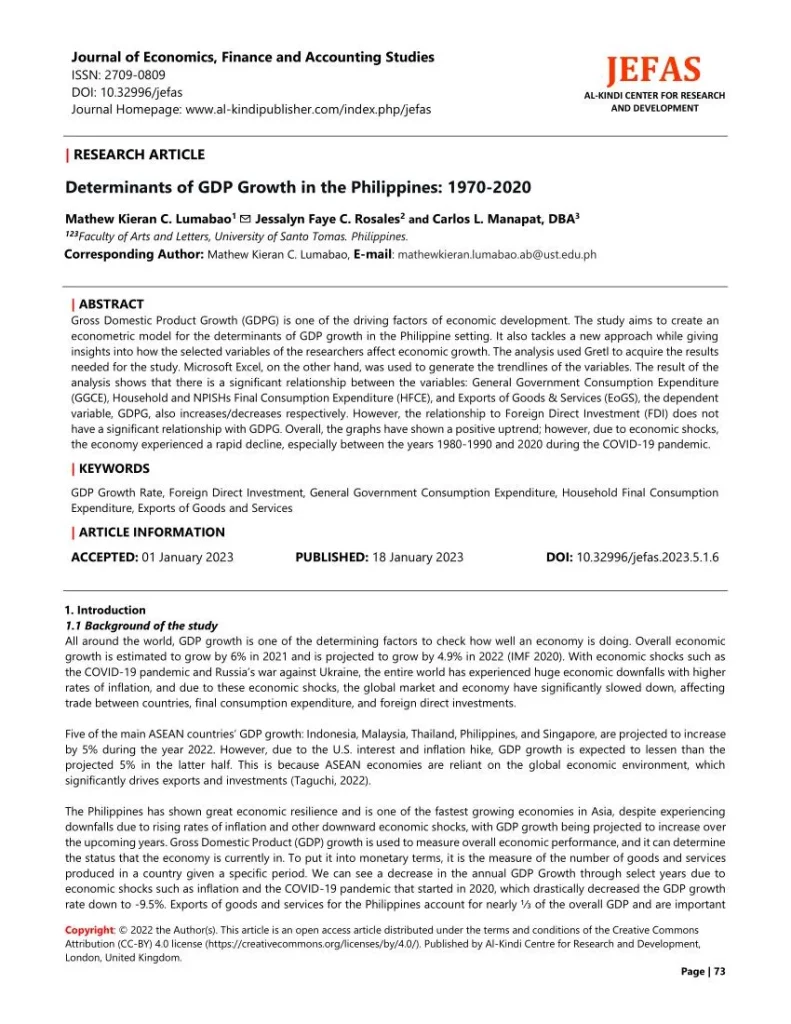
Step 5: Review Article Details Before Accessing the Full Text
Once you find a potentially useful publication, open its article record and examine the available information carefully.
Do not select an article simply because its title contains your research keyword. Its actual content, methodology and findings must support your academic objective.
Review these important publication details:
- Article title: Determine whether the publication addresses your research topic.
- Abstract: Read the summary to understand the study’s purpose, scope, methods and major findings.
- Keywords: Identify the main concepts and research areas covered.
- Author information: Examine the researchers’ names and available institutional affiliations.
- Publication details: Record the journal name, publication year, volume, issue and page numbers when provided.
- Research methodology: Identify whether the study uses qualitative, quantitative, experimental or mixed-method approaches.
- References: Examine the sources cited by the authors to discover additional academic materials.
The abstract is particularly useful when screening multiple research papers. It allows you to determine whether a publication deserves closer examination before reading the complete document.
Step 6: Open or Download Available Full-Text Research Papers
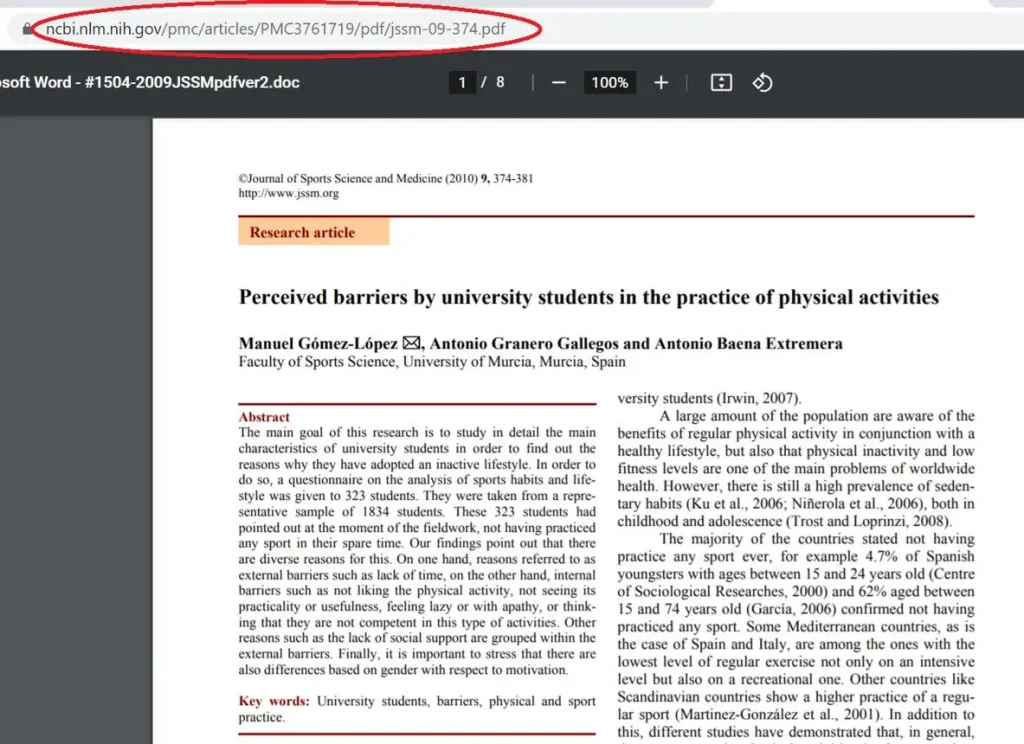
After identifying a relevant article, look for the available full-text, PDF or document access option on its publication page.
If the complete paper is accessible, open it in your browser or use the provided download function. Save useful documents in an organised research folder so that you can easily retrieve them when preparing your thesis or literature review.
A practical folder structure could include:
- Research topic and background
- Review of Related Literature
- Philippine-based studies
- International studies
- Research methodology
- Supporting references
If you are a university student, contact your institution’s library or Learning Resource Centre (LRC) to ask whether it provides access to the publication. Some institutions may offer electronic resource access through their library systems, including specific arrangements for off-campus users.
If a PDF is not available, do not assume that the article is permanently inaccessible. Check the publisher’s website, your university library catalogue or other legitimate access options.
Always respect the publication’s copyright and the platform’s Terms of Use. Downloaded research should be used according to the applicable permissions, with appropriate academic acknowledgement.
How to Use PEJ Research Correctly in Your Thesis or Academic Paper
Finding an academic publication is only the first stage of research. To produce a credible thesis, research paper or literature review, you must evaluate the information, understand the research findings and record accurate references.
Evaluate the Quality and Relevance of Each Research Article
Before including a PEJ publication in your academic work, consider these important evaluation criteria:
- Research relevance: Confirm that the article directly addresses your research question or supports an important part of your topic.
- Publication date: Consider whether the study is sufficiently recent for your subject. Older publications may still be valuable for historical or theoretical research.
- Research methodology: Understand how the researchers collected and analysed their information.
- Findings and conclusions: Identify the actual results and determine whether the conclusions are supported by the presented evidence.
- Source credibility: Examine the journal’s editorial information, peer-review procedures and publication standards.
- Author credentials: Review available author affiliations and relevant academic backgrounds.
- Supporting references: Check whether the article uses appropriate and traceable scholarly sources.
Organise Your Research References
Maintaining accurate publication information can save considerable time when preparing your thesis or academic paper.
Create a research record containing the following information:
| Reference information | What to record |
|---|---|
| Article title | Complete title of the research paper |
| Author | Full author name or names |
| Journal | Name of the academic journal |
| Publication year | Year the research was published |
| Volume and issue | Available journal publication details |
| Pages | Article page range, when provided |
| DOI or URL | Permanent identifier or original article link, when available |
| Main findings | Brief summary of the research results |
| Research relevance | How the publication supports your research topic |
A useful research strategy is to compare multiple studies rather than depending on a single publication. Comparing their objectives, methods and findings helps you identify similarities, differences and areas that require further investigation.
Organise Articles for Your Literature Review
When collecting academic publications through Philippine E-Journals (PEJ), organising your research materials from the beginning can make thesis preparation and literature review writing considerably easier. Instead of saving articles without recording their details, maintain a structured research tracking sheet containing publication information, important findings and the relevance of each study.
This approach helps you compare multiple academic publications, identify common research themes, recognise differences in previous findings and determine which studies provide the strongest support for your research objectives.
You can create a research tracking table using the following format:
| Research information | Details to record |
|---|---|
| Article title | Complete title of the published research paper |
| Author | Full name of the researcher or researchers |
| Journal | Name of the academic journal |
| Publication year | Year the article was published |
| Volume and issue | Journal volume and issue number |
| Page range | Starting and ending pages, if available |
| Research topic | Main subject or research problem |
| Methodology | Research design, data collection and analysis methods |
| Findings | Important results and conclusions |
| Relevance | How the study supports your research objectives |
| DOI or URL | Permanent article identifier or original publication link |
How to Organise Research Materials Effectively
Follow these practices to keep your literature review organised:
- Create subject-based folders: Separate research papers according to topics, chapters or academic disciplines.
- Save original PDF documents: Keep downloaded publications in clearly labelled folders whenever access is permitted.
- Record publication information: Maintain author names, journal titles, publication years and other citation details.
- Write short research summaries: Record the objectives, methodology and important findings of each article.
- Compare related studies: Identify similarities, differences and research gaps between previous publications.
- Maintain a reference list: Keep all sources organised using the citation style required by your university.
This method reduces the risk of losing important references and makes it easier to prepare a well-supported Review of Related Literature (RRL).
Create Accurate Academic Citations
Proper academic referencing is essential when using research publications discovered through Philippine E Journals. Every source included in your thesis, dissertation or research paper should be acknowledged accurately to maintain academic integrity and avoid plagiarism.
Before creating a reference, obtain the publication details from the original article record or downloaded document. Do not rely exclusively on incomplete search-result descriptions.
For students using APA 7th edition, the general journal article reference format is:
APA journal article reference format
Author, A. A. (Year). Title of the article. Title of Journal, volume(issue), page range. DOI or URL
Replace the sample fields with the verified publication information. Include a DOI when available and follow APA rules for articles without a DOI.
Important information to collect includes:
- Author’s name exactly as published.
- Year of publication.
- Complete article title.
- Full journal title.
- Volume and issue number.
- Page range, when provided.
- Digital Object Identifier (DOI), when available.
For additional referencing instructions, consult the official APA Style website.
Citation accuracy tip: Citation generators can occasionally produce incorrect author names, publication dates or journal formatting. Always compare the generated reference with the original publication before submitting your academic work.
Philippine E-Journals Articles & PDF Access
Articles
Philippine E Journal (PEJ) allows students, teachers and researchers to discover academic articles published in participating Philippine journals and research institutions. Users can search for relevant studies using keywords, explore article titles, review abstracts and examine important publication details, including author names, journal titles and publication years.
| Article information | Details |
|---|---|
| Article Title | Complete title of the research paper |
| Author | Name of the researcher or authors |
| Abstract | Summary of research objectives and findings |
| Keywords | Main topics covered by the study |
| Journal Name | Academic journal where the article was published |
| Publication Year | Year the research was published |
| Volume and Issue | Journal publication information |
| References | Sources cited by the researchers |
PDF Access
Philippine E Journals provides access to full-text research documents where individual publications’ access arrangements permit it. After finding a relevant article, open its publication page and check whether a PDF or full-text option is available. Some documents may be accessible directly, while others may require institutional authentication, a subscription or permission from the publisher.
To access research PDFs effectively, follow these steps:
- Visit the official website: https://ejournals.ph/.
- Search for your required research article using relevant keywords.
- Open the article record and review its publication information.
- Look for the available PDF or full-text option and open the document.
- If access is restricted, contact your university library or check authorised institutional access options.
Common Philippine E-Journals Problems and Their Solutions
Although Philippine E Journal provides a central platform for discovering academic publications, users may occasionally experience website, search, authentication or document-access difficulties. Understanding how to address these situations can help students continue their research without unnecessary delays.
The following table explains common PEJ problems and practical troubleshooting solutions.
| Common problem | Suggested solution |
|---|---|
| Website does not load | Check your internet connection, refresh the page, clear the browser cache or try another updated browser. |
| Search produces unrelated results | Use more specific keywords, alternative academic terms or a narrower research phrase. |
| Full-text PDF is unavailable | Check the individual article’s access conditions and contact your university library about possible institutional access. |
| Login credentials are not accepted | Verify your username and password, check whether your account is active and contact the institution that issued your credentials. |
| Article information appears incomplete | Examine the original article record, journal issue or complete document if available. |
| PDF download does not start | Check browser download settings, allow permitted downloads or try opening the document directly. |
| Journal indexing information is unclear | Verify the exact journal title and ISSN using Scopus Sources or the Clarivate Master Journal List. |
| Citation information is missing | Review the article’s first page, publication record and corresponding journal issue. |
| Search results contain outdated research | Add a publication-year range or use more specific search terms to identify recent studies. |
| Website displays an error | Reload the page, try another browser or revisit the platform later if the problem appears temporary. |
Additional Research and Account Safety Tips
Protecting your academic information is important when using online research platforms.
- Always use the official PEJ website: ejournals.ph.
- Avoid unfamiliar third-party websites offering unauthorised research downloads.
- Never enter university login credentials on unverified pages.
- Use legitimate institutional access arrangements for restricted publications.
- Keep backup copies of permitted research documents and citation records.
- Respect article copyright, publisher permissions and the platform’s terms of use.
If an access problem continues, contact the appropriate university library or the platform’s official support channel rather than sharing your account credentials with an unknown service.
Frequently Asked Questions About Philippine E-Journals (PEJ)
Final Thoughts
Philippine E Journals (PEJ) is a valuable starting point for students, educators and researchers looking to discover scholarly publications from Philippine universities and research organisations. Whether you are preparing a college assignment, developing an undergraduate thesis, writing a Review of Related Literature (RRL) or conducting advanced academic research, the platform can help you explore relevant journals, identify previously published studies and find research materials connected to your academic subject.
To make the most of Philippine E-Journals in 2026, use specific research keywords, explore the journal directory, carefully evaluate article abstracts and verify publication details before including any study in your work. Maintain an organised reference list, check journal indexing claims through official databases and understand the access conditions before attempting to obtain complete research papers or PDF documents.